From Steel Coil to Tested Radiator
A transparent, documented ten-stage process with 100% pressure and leak testing built in—so international buyers can verify quality before installation.
Engineered Quality at Every Stage
Each LEOtherm radiator follows a controlled production sequence. Material traceability begins at coil inspection and continues through forming, welding, testing, coating and packing—with inspection data compiled for every shipment.

The Ten-Stage Manufacturing Process
Cold-rolled steel coil—Q235B carbon steel or 304 stainless steel—is inspected on arrival against its material certificate, then uncoiled, leveled and prepared for forming. Material traceability is recorded from this first stage.
High-tonnage presses form each steel sheet into the characteristic radiator panel profile, creating the internal oil channels. Tooling controls channel geometry to ensure consistent oil flow and dissipation area across every panel.
The two formed half-panels are joined by automated resistance seam welding, producing continuous, leak-tight oil channels. Welding parameters are monitored to deliver repeatable, high-integrity seams.
Top and bottom header pipes are cut, machined and fitted with flanges to DIN, ANSI or GB standards. Panels are aligned to the headers in a fixture to hold center distances and overall geometry within tolerance.
Panels are welded to the header pipes. Critical joints are completed with controlled welding procedures, balancing automation and skilled manual welding to ensure structural strength and sealing.
Every radiator is pressurized with air and held for a sustained period, then checked using submerged-water and soap-bubble inspection. Units must show zero leakage before they advance to surface treatment.
Carbon-steel radiators are shot-blasted to remove scale and create a clean, profiled surface for coating adhesion. This step is critical to long-term corrosion protection.
A protective finish is applied—hot-dip galvanizing, electrostatic powder coating or multi-layer paint—selected for the installation's corrosivity class. Coating thickness is checked to specification.
Each radiator undergoes dimensional inspection, coating-thickness checks and visual review. Inspection data and material test reports are compiled for the shipment documentation.
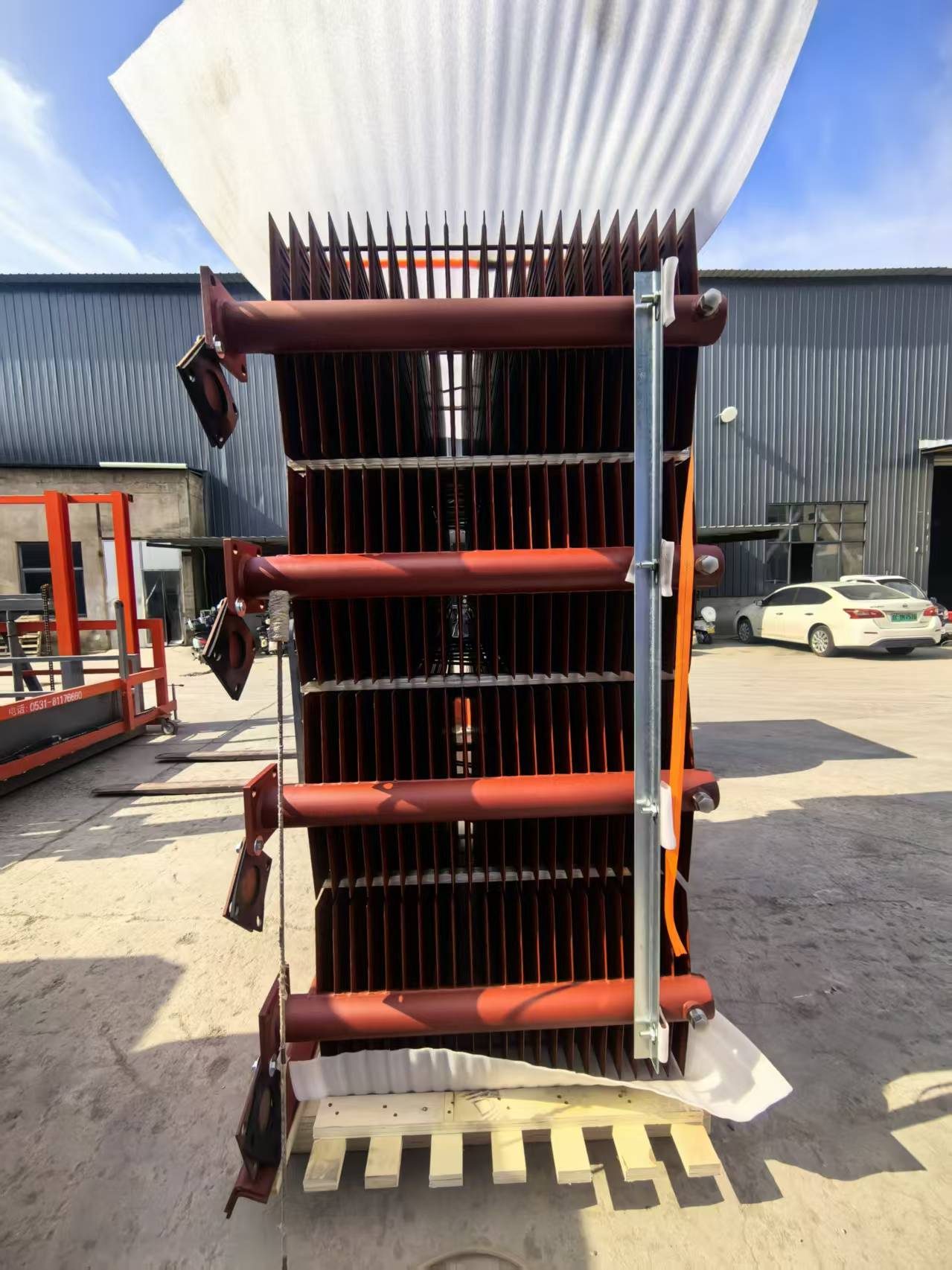
Finished radiators are secured on heavy-duty pallets or in reinforced wooden crates with protective wrapping and battens, packed for safe sea-freight transport to destination ports worldwide.
Documented, Verifiable, Export-Ready
Our quality management system is being aligned to ISO 9001 practice. We welcome virtual factory tours and sample evaluation so your team can validate our process before placing a production order.
Every radiator is pressure and leak tested before it leaves the line.
Material test reports and dimensional inspection data with each shipment.
Virtual tours and process videos available on request before you order.
Send us your drawings or transformer ratings and our engineering team will respond within 24 hours with a detailed technical proposal.